The Future of our Education is here
In the world of 7 billion people we need to educate all of them. This is the future of an educated world and we are proud to say that the Future of Education is here

The Future of our Education is here
In the world of 7 billion people we need to educate all of them. This is the future of an educated world and we are proud to say that the Future of Education is here
Introduction to C/C++
The C language was developed in 1972 by Dennis Ritchie at Bell Telephone
laboratories, primarily as a systems programming language (a language to write operating systems with).
Many previous operating systems had been written in assembly. Unlike assembly, which produces programs
that can only run on specific CPUs, C has excellent portability, allowing Unix to be easily recompiled
on many different types of computers and speeding its adoption. C and Unix had their fortunes tied
together, and C's popularity was in part tied to the success of Unix as an operating system.
The C++ language was developed in 1985 by Bjarne Stroustrup at Bell Labs as an extension to C, starting
in 1979. C++ adds many new features to the C language, and is perhaps best thought of as a superset of
C, though this is not strictly true (as C99 introduced a few features that do not exist in C++). C++'s
claim to fame results primarily from the fact that it is an object-oriented language. As for what an
“object” is and how it differs from traditional programming methods, well, we'll cover that in later
chapters.

Programming in JAVA
Java was developed in 1995 by James Gosling. Java is a class-based,
object-oriented programming language that is designed to have as few implementation dependencies as
possible. It is intended to let application developers write once, and run anywhere (WORA), meaning that
compiled Java code can run on all platforms that support Java without the need for recompilation.
Java is widely used for developing applications for desktop, web, and mobile devices. Java is
known for its simplicity, robustness, and security features, making it a popular choice for
enterprise-level applications. It helps to create reusable code and modular programs.
Java is a
class-based, object-oriented programming language and is designed to have as few implementation
dependencies as possible. A general-purpose programming language made for developers to write once run
anywhere that is compiled Java code can run on all platforms that support Java. Java applications are
compiled to byte code that can run on any Java Virtual Machine.

Introduction to PYTHON
Python was developed in 1991 by Guido van Rossum. It is a widely used
general-purpose, high-level programming language. It was designed with an emphasis on code readability,
and its syntax allows programmers to express their concepts in fewer lines of code. Python is an
open-source (free) programming language that is used in web programming, data science, artificial
intelligence, and many scientific applications.
Python is a dynamic, interpreted
(bytecode-compiled) language. There are no type declarations of variables, parameters, functions, or
methods in source code. This makes the code short and flexible, and you lose the compile-time type
checking of the source code.
Python tracks the types of all values at runtime and flags code
that does not make sense as it runs. It is widely used in data science, machine learning, and artificial
intelligence due to its simplicity and powerful libraries. Programs of python can be developed and
executed on multiple operating system platforms.

Basics of HTML , CSS & JAVASCRIPT
HyperText Markup Language (HTML) is the standard markup language for
documents designed to be displayed in a web browser. HTML elements are the building blocks of HTML
pages. HTML constructs images and other objects such as interactive forms may be embedded into the
rendered page. HTML provides a means to create structured documents by denoting structural semantics for
text such as headings, paragraphs, lists, links, quotes, and other items.
Cascading Style Sheets
(CSS) is a style sheet language used for describing the presentation of a document written in a markup
language. CSS is designed to enable the separation of content and presentation, including layout,
colors, and fonts. This separation can improve content accessibility; provide more flexibility and
control in the specification of presentation characteristics; enable multiple web pages to share
formatting by specifying the relevant CSS in a separate .css file, which reduces complexity and
repetition in the structural content.
JavaScript (JS) is a programming language often
abbreviated as JS, is one of the core technologies of the World Wide Web. JavaScript is a high-level,
often just-in-time compiled language that conforms to the ECMAScript standard. It has dynamic typing,
prototype-based object-orientation, and first-class functions. It is multi-paradigm, supporting
event-driven, functional, and imperative programming styles. It has application programming interfaces
(APIs) for working with text, dates, regular expressions, standard data structures, and the Document
Object Model (DOM).
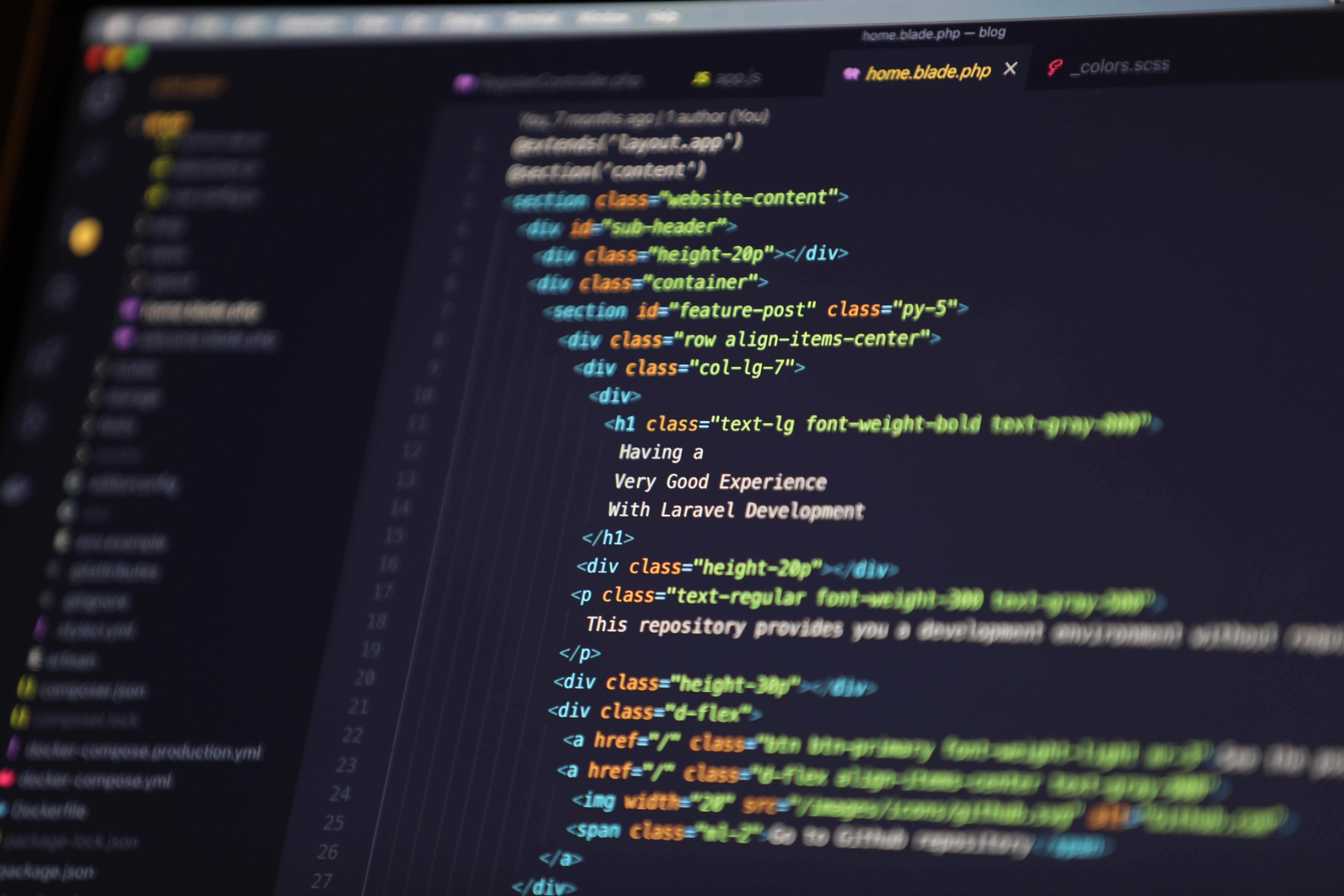
Welcome to our coding website, where we strive to provide valuable resources and insights for programmers of all levels. Our team of experienced developers is passionate about sharing knowledge and helping you enhance your coding skills.
At iEducate, our mission is to empower programmers by offering comprehensive tutorials, articles, and examples covering various programming languages and technologies. We aim to create an inclusive community where learners can thrive and professionals can stay updated with the latest industry trends.
Topics Covered:-